



Undeclared/Hidden Dangerous Goods Prevention Guide for Customers
Dangerous goods (DG) are articles or substances capable of posing a risk to health, safety, property or the environment and that meet one of the dangerous goods hazard classes in IATA (International Air Transportation Association) DG regulations. Undeclared dangerous goods are dangerous goods articles or substances offered for FedEx Express air transportation without any required DG markings, DG labels, DG paperwork or an airbill entry indicating the shipment contains dangerous goods. These shipments are referred to as undeclared/hidden dangerous goods.
1. Are you shipping dangerous goods or hazardous materials? These terms are synonymous in meaning.
-
When completing a paper airbill, answer the question, “Does this package contain dangerous goods?”
-
Customers using computer systems to prepare shipments must select dangerous goods or dry ice as applicable in the automation device used.
-
A Safety Data Sheet (SDS) provides product safety and DG transportation requirements. Section 14 Transportation of the SDS will include International Air Transport Association/International Civil Aviation Organization (IATA/ICAO) DG requirements for UN/ID number, proper shipping name, hazard Class and if applicable, subsidiary hazard and/or packing group.
-
Products that are not DG under IATA/ICAO will usually indicate “non-hazardous,” or “not restricted” or “not regulated” next to the IATA/ICAO DG designation (see examples below).
IMAGE EXAMPLES GOES HERE
2.
There are several keywords on products and other conditions that may indicate the presence of DG:
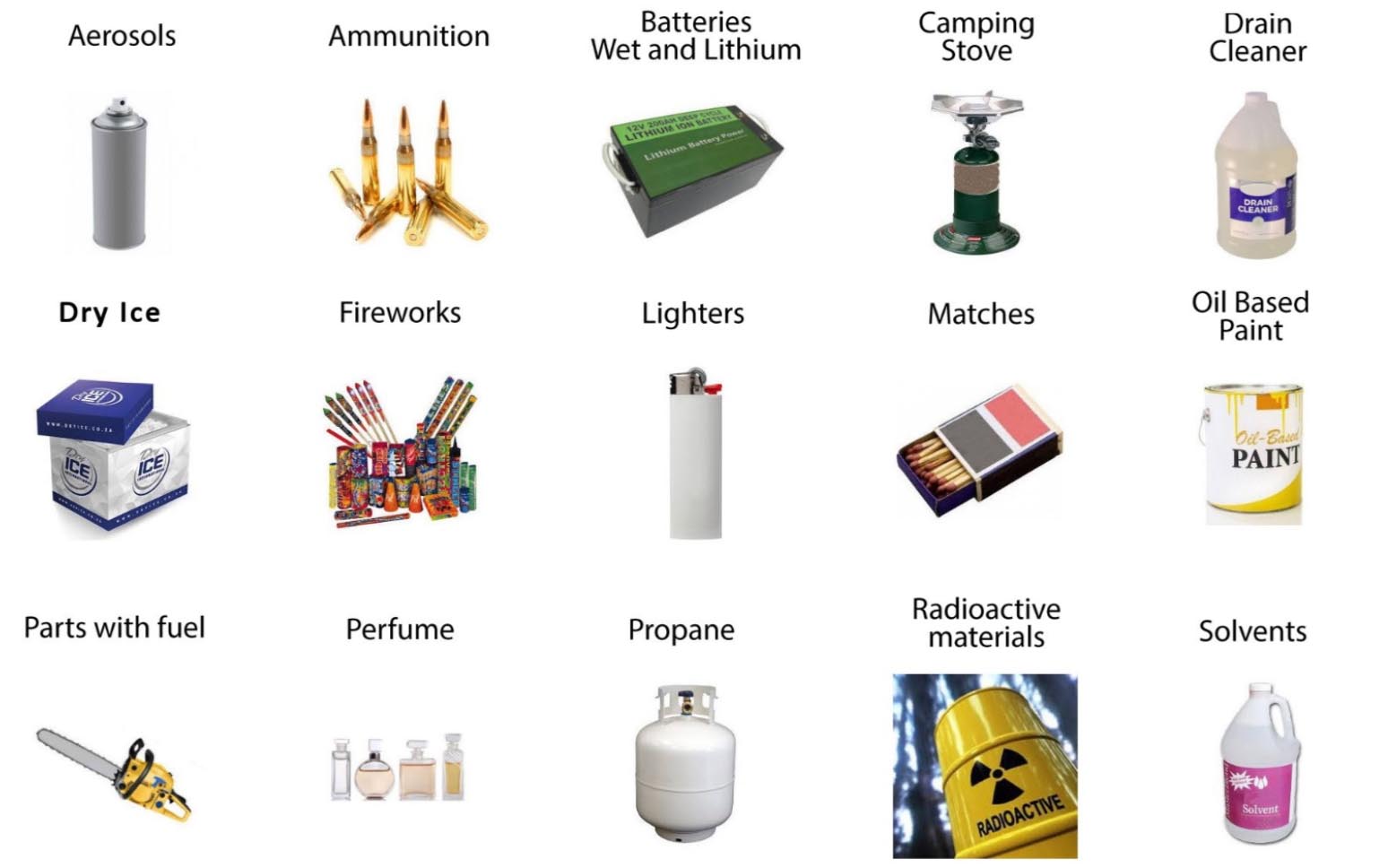
- Aerosols, ammunition, batteries (wet and lithium), camping stove, drain cleaners, dry ice, fireworks, lighters, matches, oil-based paint or corrosive paint, parts (with gasoline or kerosene), perfume, propane, radioactive materials and solvents.
- Aerosols and cylinders – these are under pressure regardless of the product. Typically, they meet the definition of a gas (either non-flammable, flammable or toxic). Gases are DG.
- Used parts or equipment that contain fuel or have the residue of fuel. Fuels (such as gasoline, kerosene) are flammable and these items are regulated as DG even when emptied of fuel because of remaining odor/residue. In order to send as a non-hazardous item, the equipment must be cleaned and purged of fuel with an appropriate neutralizing agent to nullify the hazard per the requirements in the IATA DG regulations on this topic.
NOTE: Firearms without ammunition are not dangerous goods. Some examples of DG are shown below.
3. Is your product perishable? Is Dry Ice, UN1845 being used in the package as a coolant? Another name for Dry Ice is carbon dioxide solid. Dry Ice is a regulated dangerous good under the IATA DG regulations when shipped in any amount and for any purpose (food, medical, to keep chemicals cold, etc.)


